
Most people don't quit writing because the story runs out , they quit because Chapter 3 is where the excitement of a new idea collides with the reality of finishing a full-length manuscript. If you've opened the same document a dozen times this month and made it no further than page 30, you're not broken and you're not lacking talent. You're missing a system. Learning how to finish writing a book is less about waiting for inspiration and more about building a repeatable process that survives the days you don't feel like writing at all.

Why Most Writers Get Stuck at Chapter 3
Chapter 3 is where the honeymoon phase of a new book ends. According to the Book Writers Academy, roughly 97% of people who start writing a book never finish it, out of every 1,000 people who begin, only about 30 complete a draft. That statistic isn't about willpower; it reflects what happens once the initial burst of plot and characters gives way to the slower work of structure, pacing, and daily output. NaNoWriMo, the writing challenge that popularized the 50,000-word-novel-in-a-month format, required participants to average 1,667 words a day to hit that goal, and even with that clear daily target, historical completion rates have hovered under 20%, according to NaNoWriMo's own program history. The obstacle to how to finish writing a book usually isn't the idea. It's the absence of a plan for the middle.
What Is Stopping You From Finishing Your Book?
The short answer to how to finish writing a book is to fix three problems at once: no fixed word-count target, no outline past the opening chapters, and no deadline with real consequences. Writers often treat the first draft as a search for the "right" sentence, which turns editing and drafting into the same exhausting task and kills momentum by Chapter 3. Add in an unclear ending, and the manuscript stalls because there's nothing concrete left to write toward. Roughly 80% of people say they believe they have a book in them, yet only about 20% of those who start ever publish one, the gap between those numbers is a process problem, not a talent problem.
How to Finish Writing a Book: 7 Proven Steps
If you're ready to stop restarting Chapter 3 and actually learn how to finish writing a book, these seven steps work regardless of genre, word count, or how many false starts you've already had.
1. Set a fixed daily or weekly word-count goal. Stephen King has written that he likes to get "ten pages a day, which amounts to 2,000 words," as he describes in his memoir On Writing, the exact number matters less than picking one and tracking it every session.
2. Finish the outline before you finish the draft. You don't need every scene mapped, but you need to know your ending before Chapter 10, or the story will stall the moment the opening momentum runs out.
3. Separate drafting from editing completely. Write the whole scene badly before you fix a single sentence; editing while drafting is the single biggest cause of a stalled manuscript.
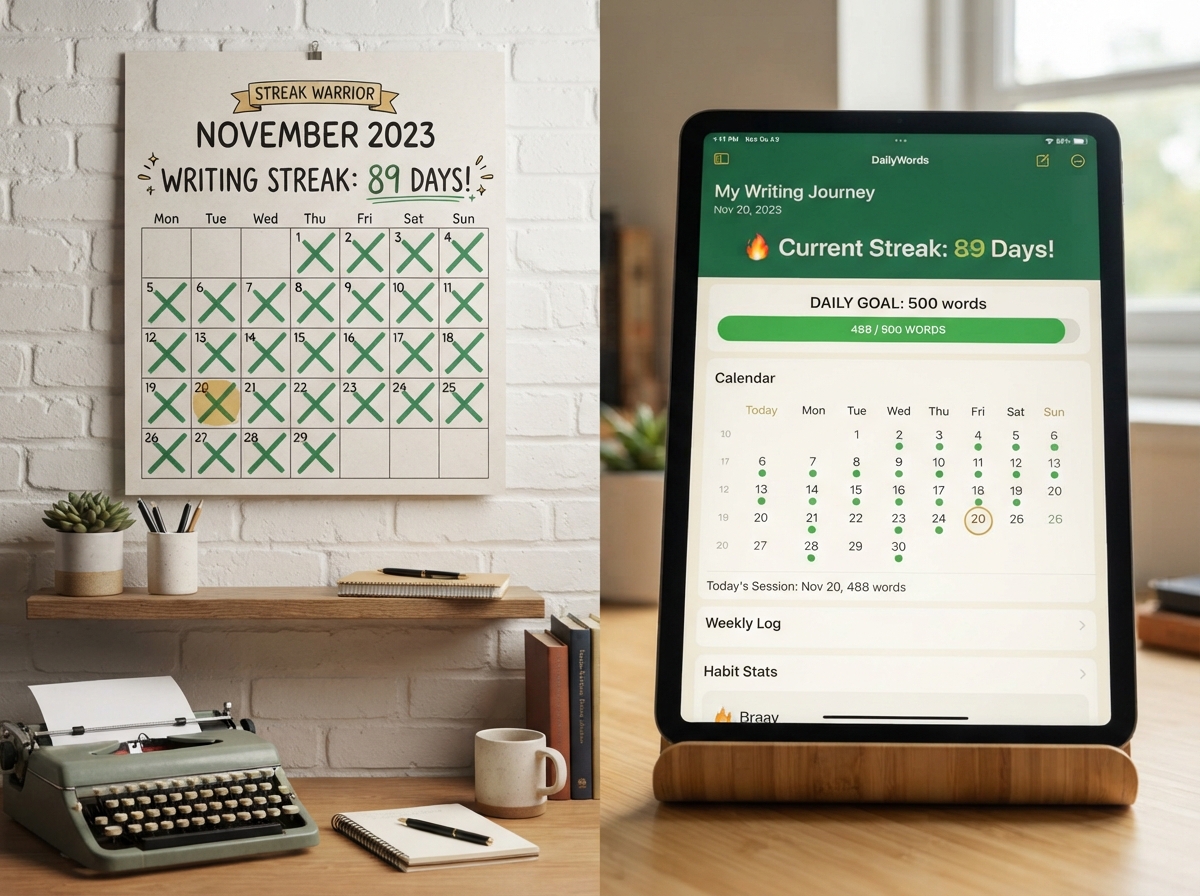
4. Build a visible streak. A wall calendar, spreadsheet, or app like Scrivener's project targets turns invisible progress into something you can see grow week over week.
5. Set a real deadline with a real cost. A deadline tied to a writing group, a pre-booked editor, or a public announcement creates the pressure that "someday" never does, often the missing ingredient in how to finish writing a book on schedule.
6. Protect the file you're building. Back up your draft in at least two places, and if you're sharing chapters with beta readers or collaborators, read how to protect your book draft from copyright theft before you send anything out.
7. Bring in outside help before you give up. A developmental editor, coach, or ghostwriter can solve in a week what might otherwise stall a manuscript for another year.

How Does a Daily Writing Schedule Help You Finish?
A fixed writing schedule works because it removes the daily decision of whether to write at all. When word count becomes a recurring appointment, even just 300 to 500 words before breakfast, the manuscript grows without requiring motivation on any single day. This is the most reliable answer to how to finish writing a book on a realistic timeline: consistency beats intensity. A writer producing 500 words a day finishes an 80,000-word manuscript in roughly 160 days, without ever needing a single marathon writing session.
When You're Still Stuck: Getting Outside Help
Sometimes the fastest path to how to finish writing a book is admitting the draft needs another set of hands. If you've rewritten Chapter 3 five times and still can't move past it, that's usually a sign the outline, not your discipline, is the problem. A collaborator can diagnose that gap fast. Our guide on what ghostwriters actually do breaks down how a professional writer can take your notes, voice, and outline and turn them into finished chapters, without you ever having to figure out how to finish writing a book entirely alone.
What Happens After You Finish Writing Your Book
Once you've solved how to finish writing a book, a new set of decisions starts immediately: editing, cover design, and publishing platform. Readers form an opinion about a book within about five seconds of seeing the cover, so it's worth reading our breakdown of what makes a book cover work in five seconds before you commission one. On the publishing side, self-published authors typically choose between Amazon KDP and IngramSpark, and the two platforms differ significantly on distribution, printing cost, and royalty structure, our comparison of KDP vs. IngramSpark walks through which one fits your goals.

Final Thoughts
Chapter 3 doesn't have to be where your book dies. The writers who finish aren't the ones with more talent or more free time, they're the ones with a daily word count, a finished outline, and a deadline that actually matters. Put those three pieces in place, and you now have a real answer to how to finish writing a book, from the page you're stuck on today to the one marked "The End."