
Staring at a blank page isn't usually a creativity problem — it's a structure problem. Most writers who feel stuck have plenty to say; what they're missing is a map for saying it in order. This is the pattern behind almost every writer's block nonfiction book struggle: the ideas exist, but there's no framework holding them together, so every sentence requires two decisions at once — what to say, and where it belongs. That's true whether the book is a business guide, a memoir, or a technical manual — the block shows up as soon as raw material outgrows the writer's ability to hold its order in their head. Fix the structure first, and the block tends to clear on its own.
Why Writer's Block Nonfiction Book Problems Are Really Structure Problems
A widely cited New York Times survey found that roughly 81% of Americans say they want to write a book, yet other surveys put the completion rate at under 3%. Writer's block is named directly as the reason by about 33% of people who abandon a manuscript, according to the same research. Nonfiction writers hit this wall especially hard: subject-matter expertise doesn't automatically organize itself into chapters. A writer's block nonfiction book scenario is almost always a sign the outline came after the writing started, instead of before it.
What Causes Writer's Block in a Nonfiction Book?
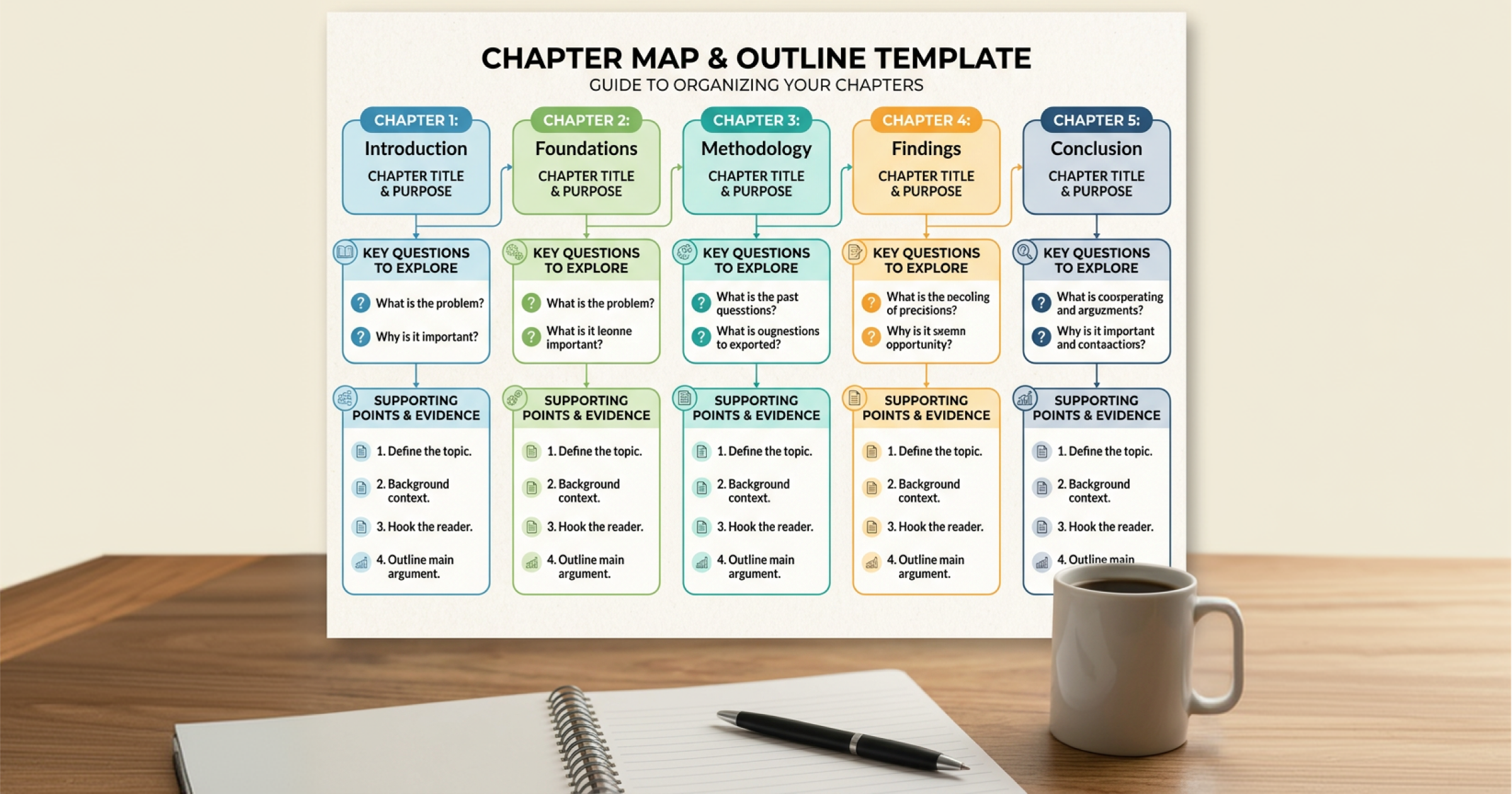
Writer's block in nonfiction writing is caused by trying to organize information and write it at the same time. When a writer opens a blank document without a chapter map, every paragraph demands two jobs at once — decide what to say, then decide where it fits in the larger argument. That double cognitive load, not a lack of skill or ideas, is what stalls momentum. William Zinsser made the same point in On Writing Well: he argued writers should identify their single core idea and choose their ending before they start drafting, so every chapter builds toward one destination instead of wandering. Recognizing that a writer's block nonfiction book slump is structural, not personal, is often what makes it possible to start again.
Build a Chapter Map Before You Write a Word
The fastest fix for a stalled writer's block nonfiction book draft is a one-page chapter map, built before any prose. Skipping this step is the most common reason a writer's block nonfiction book draft stalls, because there's nothing yet to fill in. For each planned chapter, write down the single question it answers, three supporting points, and one example, case, or data point that proves it. A typical nonfiction manuscript runs 50,000 to 80,000 words across 10 to 14 chapters, according to standard trade-publishing benchmarks, so a chapter map at that scale usually takes a single afternoon to sketch — often the difference between a writer's block nonfiction book draft that stalls and one that gets finished. Novelist Randy Ingermanson designed a similar approach for fiction called the Snowflake Method, and the same logic transfers directly to nonfiction: start with one sentence describing the book, expand it into a paragraph per chapter, then expand each paragraph into a full outline before writing a single chapter in full. Our guide on how to finish writing a book walks through a fuller version of this process chapter by chapter.

Use a Framework, Not Willpower
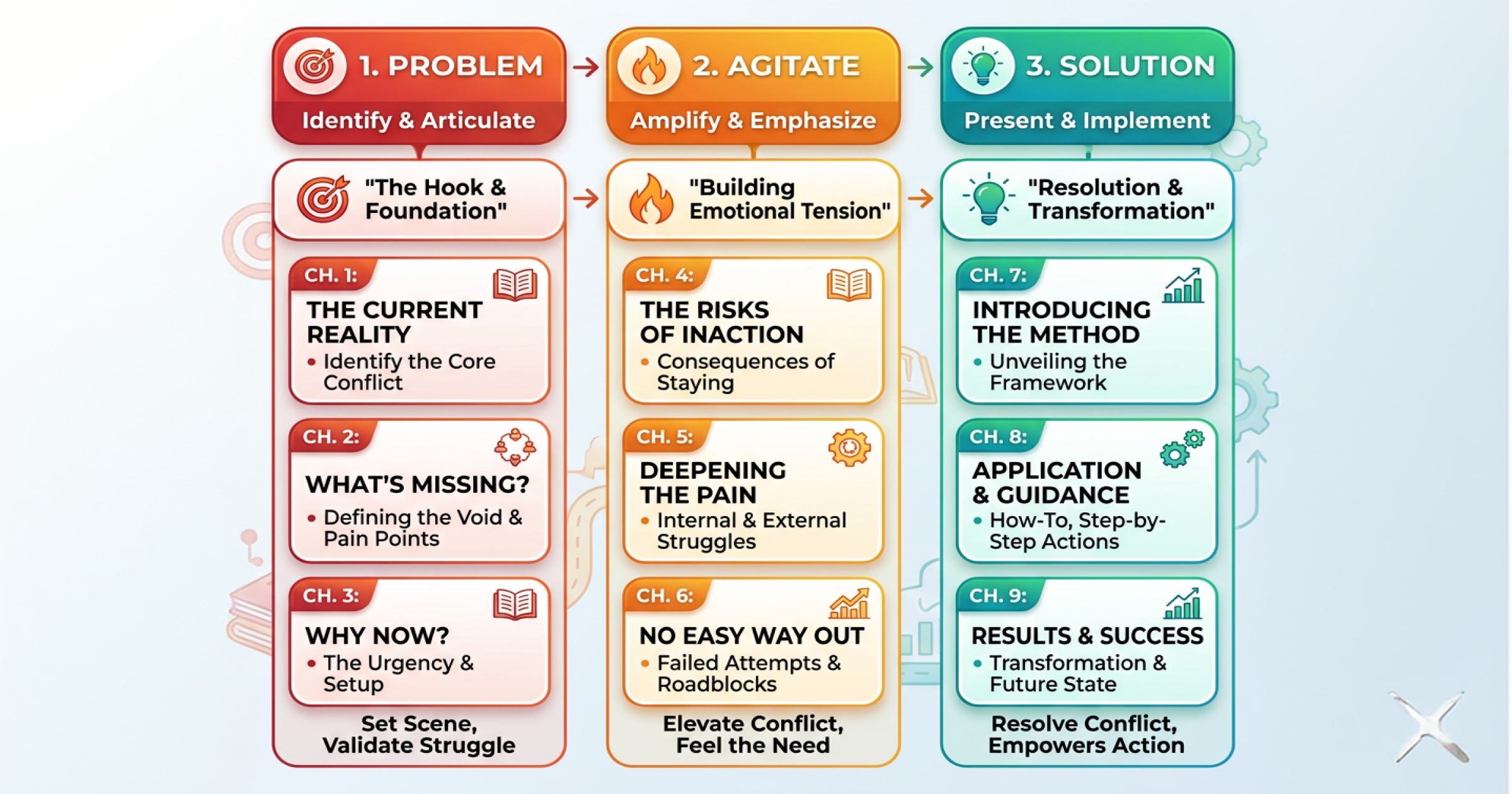
Treating a writer's block nonfiction book problem as a discipline failure usually makes it worse, because the missing piece is a system, not motivation. The Problem-Agitate-Solution framework — common in nonfiction and business writing — gives every chapter a built-in shape: state the reader's problem, show why it matters, then deliver the fix. Pairing that with the Pomodoro Technique, Francesco Cirillo's 25-minute focused work interval, keeps drafting sessions short enough to finish a single outlined section without stalling. Tools like Scrivener and Notion make it easy to keep the chapter map visible while drafting. Whichever tool holds the map, the goal is the same: separate the thinking work of ordering ideas from the physical work of writing sentences, so the two never compete for attention in the same sitting. It's worth noting how many people are finishing books this way: Bowker, the U.S. ISBN agency, has recorded more than 2 million new ISBNs issued to self-published titles every year since 2019, with roughly 2.3 million registered in 2021 alone. None of these tools solve a writer's block nonfiction book problem on their own — they only work once the chapter map exists to fill in.
When Outside Help Speeds Up a Stalled Draft
Bringing in a collaborator is a structural fix, not a shortcut, when a writer's block nonfiction book draft has stalled for months rather than days. A professional can build the chapter map, interview the author for content, and draft around the outline, which removes the exact bottleneck causing the block. Our breakdown of what ghostwriters do explains how that division of labor typically works, and if the goal is a leaner digital-first project, our guide to hiring an ebook writer covers scope, timelines, and cost ranges. This is also the stage where platform choice matters: a book built for Amazon KDP has different formatting and rights considerations than one distributed wide through IngramSpark, so it helps to settle that decision alongside the chapter map rather than after the manuscript is done. Neither route means giving up ownership of the book's ideas — it means outsourcing the parts of the process that aren't the writer's core expertise.

Protect the Draft Once You've Finished It
A finished manuscript needs the same structural discipline applied to safeguarding it. Once a writer's block nonfiction book draft is complete, register the copyright, keep dated and version-tracked backups, and limit who has full-manuscript access before querying agents or publishers. Our guide on how to protect your book draft from copyright theft covers the specific steps, including registration timing and what to do before sharing a manuscript with outside readers.
The Fix Is Structural, Not Mystical
Writer's block nonfiction book struggles resolve the same way they start: through structure, not inspiration. A chapter map built before drafting removes the double cognitive load of organizing and writing at once, a framework like Problem-Agitate-Solution gives every section a repeatable shape, and short, timed drafting sessions keep momentum without requiring willpower. Writers who build the map first tend to finish; writers who wait for the block to lift on its own usually wait a long time. None of this requires talent most writers don't already have — it requires sequencing the work correctly, which is a decision anyone can make before the next writing session even starts. Start with one sentence describing the book, expand it into a chapter-by-chapter outline, and the draft that felt impossible last month becomes a series of sections that are simply due to be filled in.